
A Score/Sound Approach to Singin’ in the Rain (1952)
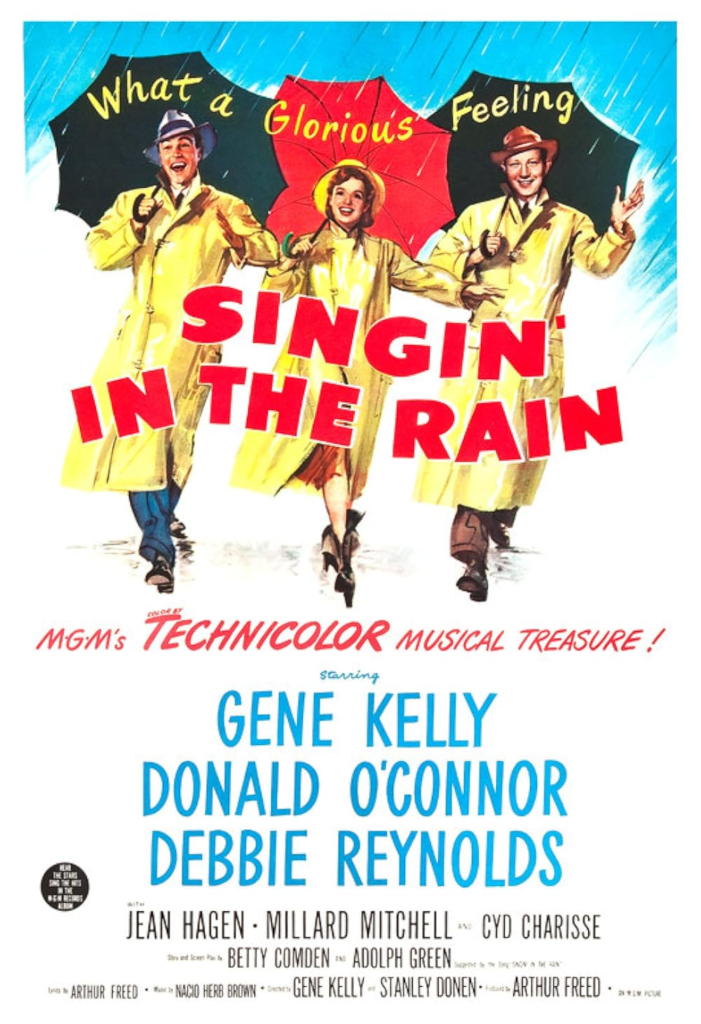
Singin’ in the Rain (1952) – Score/Sound
It’s not a cop out, I swear. I swear the Review Roulette wheel landed on Score/Sound for Singin’ in the Rain (1952) and I laughed right out loud because come on. But, I’m dedicated to the gimmick here, so we gotta do what the wheel says. I just wanted to get that out of the way because I’m sure, if you’re familiar with Singin’ in the Rain, you also guffawed or rolled your eyes at the thought of trodding upon such well-trod territory, or, to be more topical, tap-dancing upon such well-tapped hardwood floor.
As is the premise here, I tried to put my immediate thoughts aside to really watch the film for something else to talk about apart from the obvious (which I’ll explain in a sec why this is ridiculous for those unfamiliar), and I think there’s another layer we can talk about that’s far more interesting to me at least than just recounting the plot of the film and marveling.
Singin’ in the Rain is considered an absolute classic musical. It is so classic that it’s literally the poster for the Wikipedia page “Musical film,” and if you don’t know the film, you most certainly know its most famous sampling/homage: Tom Holland’s Lip Sync Battle performance of “Umbrella” that begins with Gene Kelly’s titular and iconic song and dance sequence from the film. I was going to hyperlink it, but I think we should embed this one. This is important context.
Nice. I like how you can see the moment Zendaya knows she’s going to marry him one day.
Anyway, Singin’ in the Rain is a musical but it’s also a work of historical-fiction-comedy-romance steeped in nostalgia and retrospective not unlike another absolute classic, 1978’s Grease. In that Grease review, I wrote about the nostalgia element of the film being both parodic and sincere, and I think that really applies here as well. The film is about the biggest change in Hollywood history and the practicalities of it: the introduction of sound to movies. Talkies changed the game, as one would expect. Studios needed new crews who were trained in sound engineering; cinemas needed new equipment and training to synchronize sound with images; there were fewer jobs for musicians providing musical accompaniments to silent films but way more jobs for diction coaches and singing teachers; scripts had to be written with compelling dialogue in place of title cards; and actors had to adapt or retire because silent acting is leagues apart from talkie acting. Singin’ in the Rain touches on most of these down to a funny sequence of our main silent star Lina Lamont (Jean Hagen) overacting with physical movements that mean the microphone misses every other word she says.
And that’s where the plot is: Lina. Lina and her silent film co-star Don Lockwood (Gene Kelly) are being thrust into the world of sound, but there’s one glaring catch. Lina has the most obnoxious voice in the world. Hagen does such an amazing job maintaining her Lina voice the whole film, especially in scenes with a diction coach. Phenomenal stuff.
So, Lina is annoying as fuck and the first screening of the film is a laughing stock, but luckily Don has stumbled upon Kathy Selden (Debbie Reynolds), a singer, dancer, and wannabe stage actor with a beautiful voice who steps in to dub over Lina’s lines in their talkie. Not only that, but Don’s best friend Cosmo (Donald O’Connor) suggests they make the finished film, the finished film that has already been screened so it’s very much a finished film, into a musical. Truly insane idea from Cosmo, but they do it, and they include extremely long dance numbers that were obviously stipulations in Gene Kelly’s contract.
So it’s this fascinating film that’s looking back at this pivotal moment in Hollywood during its own pivotal moment in Hollywood (HUAC is in the process of restarting their hearings in Hollywood while Singin’ in the Rain is in production), and it’s got rose-tinted funny goggles to glance back through. All of that is enough to be interesting before you know that the film’s plot of Kathy (Reynolds) dubbing over Lina (Hagen) was also mimicking the actual circumstances of the production but in reverse. In one scene in the movie within the movie, showing Kathy dubbing Lina in The Dancing Cavalier, it is actually Hagen’s own speaking voice, not Reynolds. Throughout all of Singin’ in the Rain and for two full songs, Reynolds’s singing and high notes are dubbed by singer Betty Noyes. (There are so many fun facts about this film’s production, highly recommend reading about it.)
There are layers upon layers of Hollywood trickery and history in this one film, and it’s all fun and games and song and dance, so much song and dance actually, maybe a little too much song and dance. (The Broadway Melody number is introduced as “it goes a little something like this” and then lasts what feels like 20 minutes but is actually just under 9.)
Okay, I said we wouldn’t do summary and marveling, but that’s all we’ve done so far, so let’s focus. The trickery. The introduction of sound. The retrospective. It’s all best exemplified in one very short sequence at the start of the film.
We open on a film premiere for the latest from our silent stars, Don Lockwood and Lina Lamont. There’s a woman hosting the Red Carpet, narrating as stars appear. Firstly, this is an excellent narrative use of sound because you have a character whose job it is to tell us who people are, why they’re there, why we should care, and who we should pay attention to throughout the film. 10/10 use of the Red Carpet as a plot device. When Lockwood and Lamont arrive, Don answers all the questions, revealing to us that something is going on with Lina, she’s not allowed to talk to the public. Her jarring voice isn’t revealed until 13 minutes into the film.
One of the questions Don answers is about how he got here to the peak of Hollywood stardom. Here’s where the movie magic happens, foreshadowing the trickery used later in the film. Don’s answer is about how he and his best friend Cosmo came up together through a traditional training in classical arts at the best conservatories and performing in the finest establishments, maintaining “dignity. Always dignity.” While he is speaking, the sound does not match the visuals. The visuals are of two scruffy kids struggling to busk for coins, getting hooked off vaudeville stages, and standin’ in the rain as they try to make their way in Hollywood.
This sequence is, I think, perfect. It shows us Don’s character and the public performance he is putting on at all times; it gives him a depth of work ethic that explains his insecurity later in the film; it establishes the film’s playful and unserious use of retrospective and nostalgia; and, most notably here, it shows us right up front why sound is so important to films. This sequence never would have worked in a silent film. You can’t have two different narratives happening at the exact same time in a silent film because there was only one delivery mechanism for the narrative: visual. When you add sound to a film, a second pathway opens up. This sequence of Don’s past foreshadows the dubbing plot later and is also a microcosm of the complexities of audio/visual films and the trickery Hollywood can conjure up to make them.
I don’t know that I would have thought much about that sequence if I wasn’t prompted to think about score and sound in the film, but I’m glad I did. I appreciate the cleverness of starting a film about the advent of sound with a unique case for why it was so revolutionary to the medium. There’s a lot to love about Singin’ in the Rain, and a lot to look at your watch over if you’re not a dream/ballet sequence person (I’m sorry to those who are), but I think this opening sequence is truly exceptional for setting up all of the layers of the rest of the film with a little trademark Hollywood trickery.
Leave a Reply