
A Marxist Approach to Beauty and the Beast (1991)
[Contains foul (read: British) language]
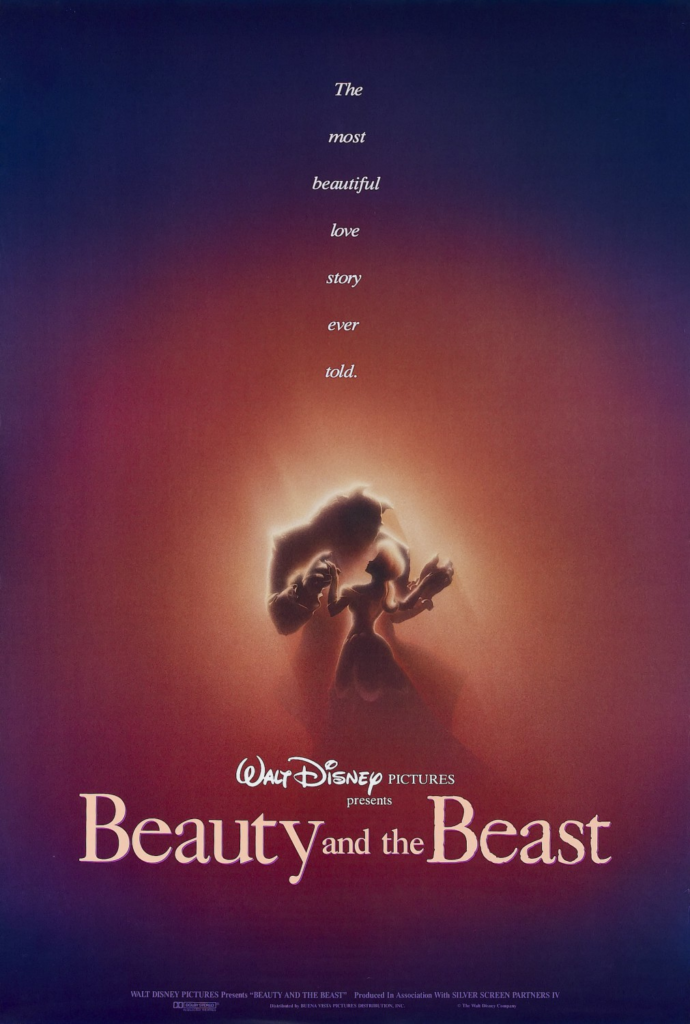
Beauty and the Beast (1991) – Marxist
It’s my birthday! And on my birthday, I get to write about whatever I want, which differs from days that are not my birthday only in that most of the time I feel a slight pressure to keep it remotely professional and sophisticated (whether I meet that standard or not is a different subject), but today we’re not doing that. We’re doing Disney’s Beauty and the Beast (1991) because I’m old now and have knee pain from my Peloton ride this morning. My body said, “happy 32nd, bitch” and I whimpered with each step, accepting fate’s cruel, cruel plans.
The Review Roulette wheel landed on Marxist as our approach and my first thought was “lmao yes.” And then, of course, my brain had to go and ruin the silliness factor of Gaston’s decimation of the egg population causing egg inflation for the whole provincial town and, we can surmise, the surrounding villages and farms subservient to the order of the town causing a knock on effect of egg austerity across France that ultimately, most likely, caused a protein crisis for Napoleon’s army and led to the eventual demise of his empire, by realizing a genuine argument. So, even though it’s my birthday and on my birthday I get to write about silliness, we actually are going to talk about a legitimate Marxist critique of the film.
Imma keep it short though.
When we’re watching a film with a Marxist lens, it’s not a cue for communism, it’s a cue to look for social classes, class consciousness, and commentaries on wealth and its disparities. I want to merge this with a gendered bend to the lens, and I want to talk about the social costs of toxic masculinity and the intersections of second-class citizens in Belle’s poor provincial town and their resident prince no one knows about.
I’m not going to litigate the fact no one knows what the deal with the local prince is. Like, is he the prince of France? Is he actually 10/11 years old when the curse is placed on him for being a little dick to the enchantress? That’s kinda harsh on the kid and also, I can literally only assume with the evidence given me in the film, all of France that they just lose their royal boy who evidently had no royal parents to raise him not to be a little dick to strangers. Their little boy prince, who, despite the lack of any other royals, does not get to be a little boy king for some reason we accept. We’re not going to talk about it, so forget it.
What we are going to talk about is that he is a little dick though. Like for real, my guy, France’s little boy prince is an asshole in a specifically Marxist way and so is the narrator (David Ogden Stiers). His whole staff, who, as we are left to conclude without any exposition, are his whole entire family and the only people in all of France who are aware of him and his existence, I ASSUME, are turned into literal things. Literal objects indicative of their purpose in the castle, relative to the boy prince’s needs of them. And he’s just super cool with this, way too cool with this, in fact.
Cogsworth (Stiers) is a clock because he’s the head of the household staff, he keeps things orderly and on time, hence a clock. Lumière (Jerry Orbach), is the enlightened maître d’ who greets everyone brightly and is the absolute light (and life) of the party, so he’s a candelabra. Mrs. Potts (Angela fucking Lansbury) is the housekeeper who is literally boiled down to her labor’s function as a teapot. The maid is literally a featherduster.
And the Beast is a beast because he’s a beast on the inside, right? We get that symbolism, but woof, WOOF, is it not 1 to 1 for the staff. They’re not clock, candle, teapot, featherduster on the inside. They’re whole ass people. Mrs. Potts is a god damn delight. Fuck you am I putting her through the trauma of lighting a fire under her ass and drinking the liquid that comes out, what the fuck, man? She’s not her function.
And that brings me to the toxic masculinity part. The Beast is just like “ye” about it. Cogsworth and Lumière and Mrs. Potts are all like, “please for the love of god, time is running out and I don’t want to be the literal object of my occupation forever, I want to feel the warmth of a human hand against my not-porcelain ass for but a moment, please be nice to Belle,” and he’s like, “if she doesn’t eat with me, she doesn’t eat at all” like an incel psycho. And yes, I get it, he was a royal orphan whose kingdom didn’t know he existed, which suggests all sorts of problems and deficiencies like the lack of a father to teach him to be better than what he is, and yes, I get that the film is about the process of him becoming better and being able to love her and be selfless and all that. I get it. But that selflessness, at no point whatsoever, is extended to the staff.
When Mrs. Potts comes in to tell him that there is a literal lynch mob headed for the castle, he says, “It doesn’t matter now. Just let them come.” WHO THE FUCK DOES IT NOT MATTER FOR, MY GUY? THERE ARE HUNDREDS OF PEOPLE-OBJECTS ON YOUR STAFF ABOUT TO GET STRAIGHT UP MURDERED AND WORSE – what happens to the featherduster is genuinely insane to include in any movie let alone a children’ s one.
He’s all like, “I’ve never felt this way about anyone before,” because Belle cleaned his wounds while he yelled at her, and you KNOW Mrs. Potts was like “mmhmmm, interesting.” He becomes a better person because he can recognize beauty on the inside in the only smokin’ hot literate broad in all of France, but he can’t recognize that his actions created and maintained a horrific liminal experience between life and death in which the human beings working in the castle were suddenly transformed into icons according to the boy prince’s uses of them and forced to stay that way for a decade until, at the literal last second, he could pull off a win, not for them, but for himself? I don’t know about all that, my man.
And none of this is to let Gaston off easy. Absolute king, the only king in France evidently, of toxic masculinity. He’s a real cunt. All talk and lynch mobs and smear campaigns until he has to fight the Beast for real and then he’s all, “no, please, don’t, I was just joshin’ when I shot you with that arrow.” Please. He killed a man. Did you know that? At least one. Not directly, I guess, but indirectly. The enchanted wardrobe pulls a wrestling move right from Monday night Smackdown and lands on a guy who is just fucked up, just mangled, floor boards coming up around him. And he doesn’t move again, he stays there the whole scene. That guy is dead. That guy died because Gaston can’t take no for an answer and had to do a whole dramatic “let’s murder her boyfriend” routine, and a man died. Under a wardrobe.
And yes, I know overcoming toxic masculinity is the whole point of the film, but maybe, MAYBE toxic masculinity isn’t just in the treatment of women but is also in the treatment of everyone, including one’s employees. Maybe Gaston leading the town’s artisans in a violent raid to overthrow the monarchy just so he can have a shot at making a woman so sad and scared she finally submits to him is toxic masculinity on many levels, not just the one. Maybe the Beast saying “just let the lynch mob in” when hundreds of lives are at stake is equally as toxic as him saying Belle can starve. Maybe treating workers with respect and not as literal objects is equal to treating women with respect and not as literal objects. Maybe the opposite of toxic masculinity is just not being a cunt all the god damn time. Temperamental is fine. Grumpy is fine. Smashing furniture that could be alive like every other fucking thing in the castle because the woman you’re holding prisoner defied your orders is not fine.
So, that’s the real lesson we should take from the film. It’s not enough to only be nice to ladies you find smokin’ hot and want to give a library to. You need to not be a cunt to everyone else, too, kids.
Leave a Reply