
A Genre Approach to Grease (1978)
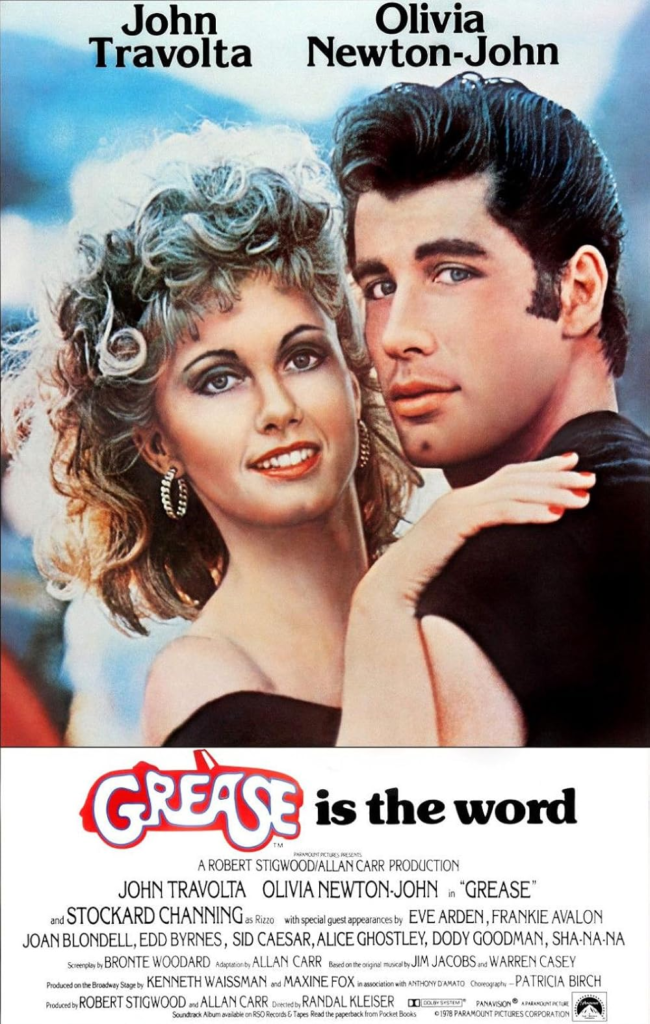
Grease (1978) – Genre
Dear darlings,
I hope you are doing well just to spite the world around you. Part of that doing well is taking time to find some joy and relaxation to revitalize you for living your best and truest life out of spite, and for me, that means some good old fashioned escapist cinema. My forever escape, the film that is just 100% fun and replaces anxious thoughts with Doody (Barry Pearl) making this sound when he first sees Danny Zuko (John Travolta), is, of course, the 1978 classic Grease.
The Review Roulette wheel landed on Genre as our approach this week, and I’m grateful for that because it opened up a new lens of viewing a film I have seen approximately one bajillion times and clued me into things I had previously overlooked. So, this week, in another slightly shorter review as my hand is still braced, let’s look at the genres Grease straddles and how it treats them.
For those new around here, I generally find genre somewhere in the sweet spot between a useless category and a fascinating thought experiment because genre is such a subjective term. Many might see Grease as a teen film, others a rom-com, most a musical, a few a parody, and some a nostalgia film, but if you refuse borders like I do, it’s all of the above in an interesting amalgamation of parodic sincerity in homage to the late Elvis. So, genre is both helpful to suggest parameters of each category but also just a grab bag of those parameters to make whatever argument we want about what it is or is not.
So, the argument I am going to make is that Grease is a perfect escapist teen comedy with one of the better and more believable romances across rom-coms set in a nostalgia-laden parody of an Elvis musical. Or, in other words, a masterpiece.
Grease covers the span of one school year during which high school seniors Sandy (Olivia Newton-John) and Danny Zuko must navigate social challenges and burning teenage emotions in pursuit of one another. Their school, Rydell High, has classic prominent cliques like the cheerleaders, the student council, jocks, and nerds, but it also has the two main friend groups that Danny and Sandy belong to: the T-bird greasers and the Plastics-prototype Pink Ladies (who I was desperate to be one of as a child).
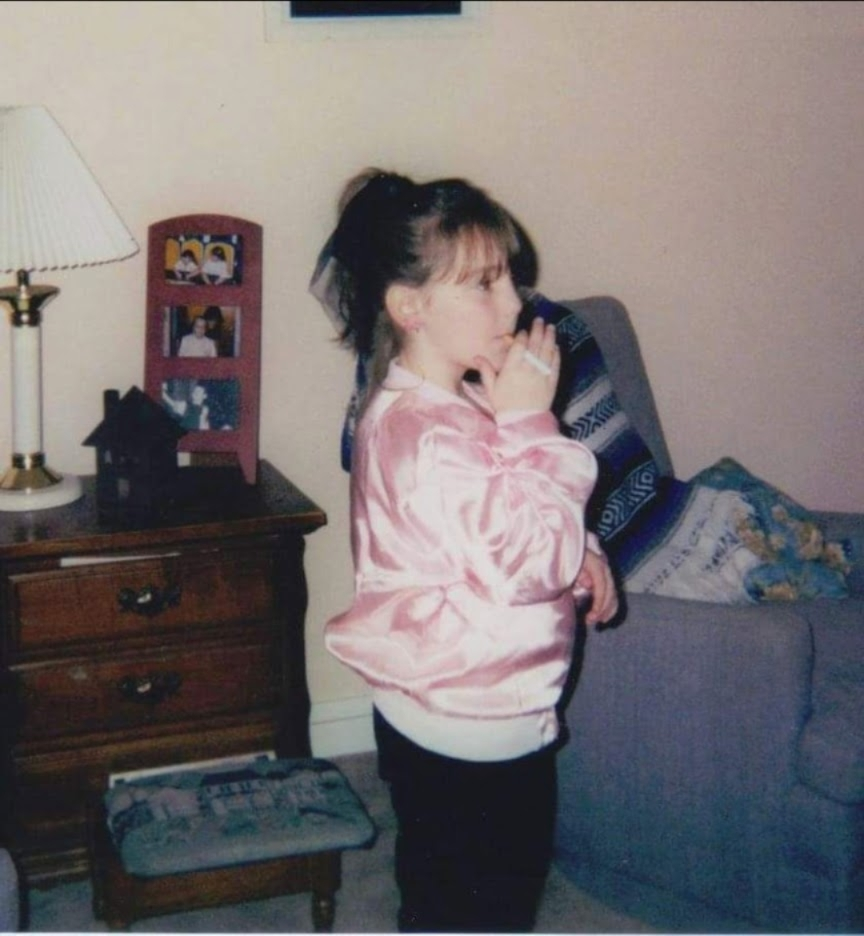
Now, I have always loved Grease. I know every word to every song to my husband’s dismay, but I was, admittedly, never in on the joke. I obviously noticed that the actors portraying teenagers were very much not teenagers, but I didn’t realize that that’s on purpose. Stockard Channing, who plays the jaded Pink Lady, Rizzo, was 34 years old when the film came out. The three T-birds reminiscent of the Three Stooges had a combined age of 82 in 1978. Travolta was one of the youngest in the cast at 24 with one T-bird (Putzie) and one Pink Lady (Marty Maraschino (you know, like the cherry)) only 22 that year. Our other lead, Newton-John, was 30 at the time. So they are clearly not teenagers, but rather adults who all have some sort of memory of the 1950s when they were children, and I think that’s important.
The cliques are all extreme stereotypes of their classifications, but the film is about breaking out of those molds to figure out what each character not only wants but also what they actually need. Much like genre as an approach, the borders begin to blur when Greaser king Danny Zuko becomes a jock and wholesome and pure Sandy becomes a leather-clad Greaser queen. Danny’s best friend, Kenickie (Jeff Conaway) has one of the best line-deliveries in the film when he completely drops the cool guy Greaser accent and admits that his condom broke because he bought it in the 7th grade (approximately 16 years prior for Conaway) and never needed one before. His delivery reminds us that they’re all supposed to be about 17 or 18 years old; in the story, they’re just kids dealing with sex, alcohol, and rock ‘n’ roll in the late 50s through this lens of childhood nostalgia for those hardlined stereotypes of bad boys and cool girls, all under the umbrella of a 70s comedy.
It’s really quite a brilliant comedy, not only for the jokes about how a graduate could become the next “President Eisenhower or Vice President Nixon”, or that you should try smoking because “it won’t kill you”, but also for the successful emotional and high school love story it tells within that comedy.
Danny and Sandy change for each other because they recognize the things the other needs to have a happy relationship. Their final duet is “You’re the One That I Want” in which Sandy tells Danny that she is willing to change for his needs as long as he continues to “shape up” in the ways that she does, acknowledging his efforts to earn a letterman sweater in track as proof of his willingness. It’s a much more believable love story than many because he has already put in the work to change on his own accord, even when she wasn’t necessarily looking, earlier in the film, and she is matching his energy at the end. Their relationship is in tandem with Kenickie’s car that seemingly inexplicably flies at the end of the film, but I think there are two explanations for that.
Firstly, the shop teacher helping the boys with the car says “if it were in any better condition, it would fly” about the car before the teens race it at Thunder Road. If we take the car as an allegory for Danny and Sandy’s relationship, it starts to make sense. The car first rolls into the film at the beginning of the school year in the same scene that Danny disappoints Sandy for the first time and sets off their relationship struggles. Danny and the T-birds sing “Greased Lightnin’” as Danny feels a bit of hope that he can fix the situation into something beautiful as he fantasizes about the best possible version of the car. Later, when Kenickie has to bow out of the race, Danny steps up and drives the car home to a win, despite damages along the way. In the final scene, after Danny and Sandy sing their needs to one another, their relationship is in the best condition of the film as they drive off in the earlier-fantasized version of the car and begin to fly.
Secondly, we’re in this deep nostalgia in the film to the point of fantasy where the genre expectations and conventions fall flat. The broken condom leads to a teen pregnancy scare with no repercussions; Marty is hit on by the creepiest man possible who she sees trying to drug her but she stays safe; all the T-birds and Pink Ladies pair up into unlikely but understandably sweet couples; and everyone in the film – jocks, nerds, cheerleaders, the coach, the principal, all of them – comes together for the final song “We’ll Always Be Together” that emphasizes how much of a fantasy this 1950s nostalgia is by equating perfection with doo wop. The car flying off can be seen as an extension of this fantasy.
Or maybe it’s a secret third thing: Grease is in conversation with Bruce Springsteen’s 1973 song “Thunder Road” and its own 50s-nostalgia-through-a-70s-perspective-a-la-greaser-imagery: Hey, what else can we do now? /Except roll down the window /And let the wind blow back your hair /Well, the night’s busting open /These two lanes will take us anywhere /We got one last chance to make it real /To trade in these wings on some wheels /Climb in back, heaven’s waiting down on the tracks.
I think Grease both defies and perfects genre in such wonderful ways by starting as an Elvis beach romance and blooming – as our characters do – in unique and interesting ways. What a good movie. If you’re feeling down, go watch Grease. It’s an absolute tonic that will refresh you to defy their expectations and live that spitefully beautiful life of yours.
Leave a Reply