
[We all need comfort texts in 2026, and for my wife and I one of our most surprising finds has been the delightful home renovation show Home Town. The show is deeply tied to its historic community of Laurel, so this week I’ll AmericanStudy a handful of Laurel histories, leading up to a special weekend tribute to what makes Home Town so special!]
Three trains and train lines through which we can trace the evolution of Laurel.
- The New Orleans & Northeastern Railroad (NO&NE): A major part of the industrialization and development of the New South about which I wrote in yesterday’s post was the growth and spread of railroads across the region. And as that hyperlinked American Rails article argues convincingly, no single new line was more important than the NO&NE: conceived in 1868 by Confederate veteran, businessman, and founder of Hattiesburg (MS) William H. Hardy; fully surveyed in 1872; constructed in fits and starts over more than a decade; and completed in exactly the same year that Laurel was incorporated, 1882. Thanks to its blossoming lumber industry Laurel was a stop on that railroad line, and in every sense that put little Laurel on the map—and not just of this railroad, but of others like the Queen & Crescent Route between New Orleans and Cincinnati to which this line connected travelers.
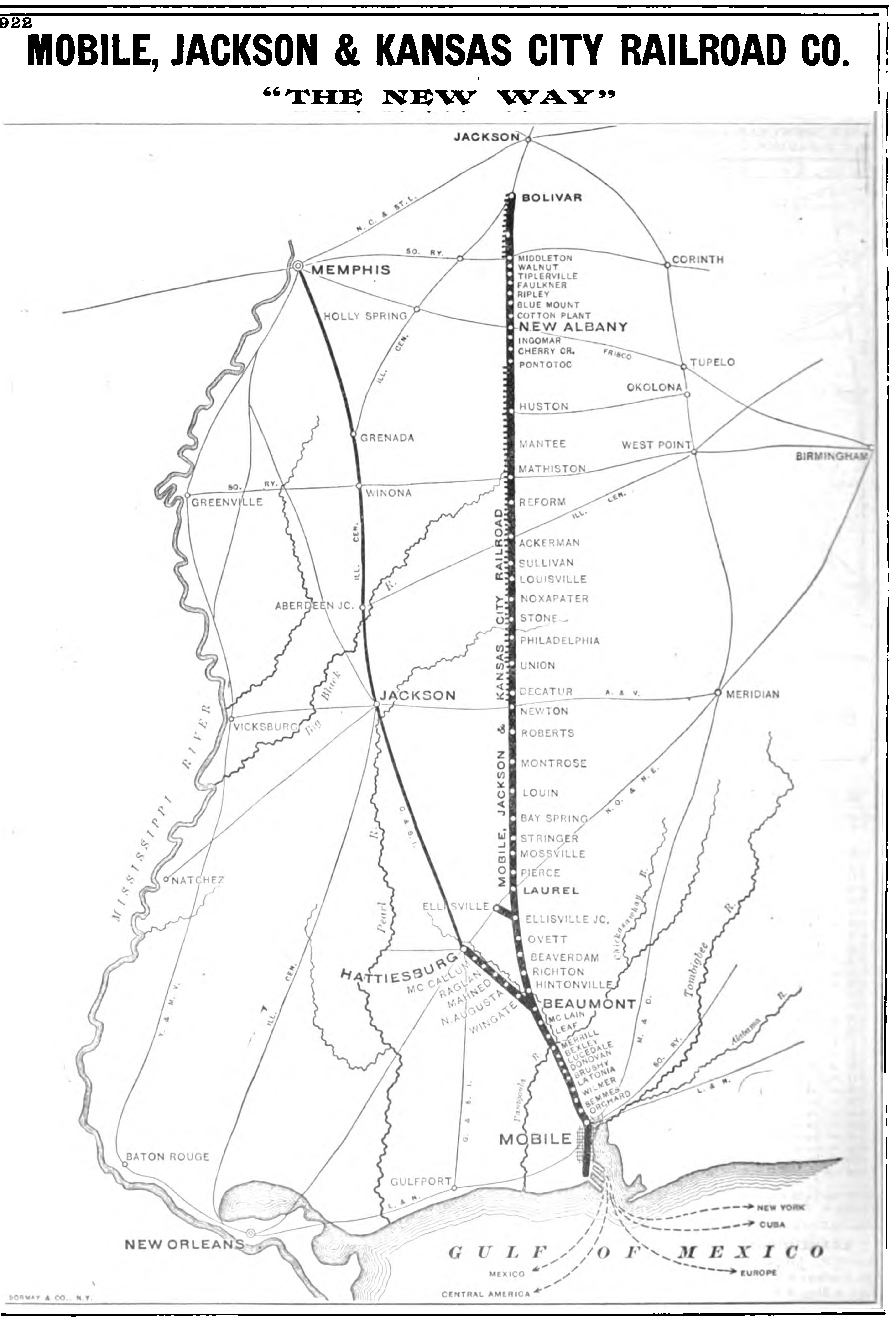
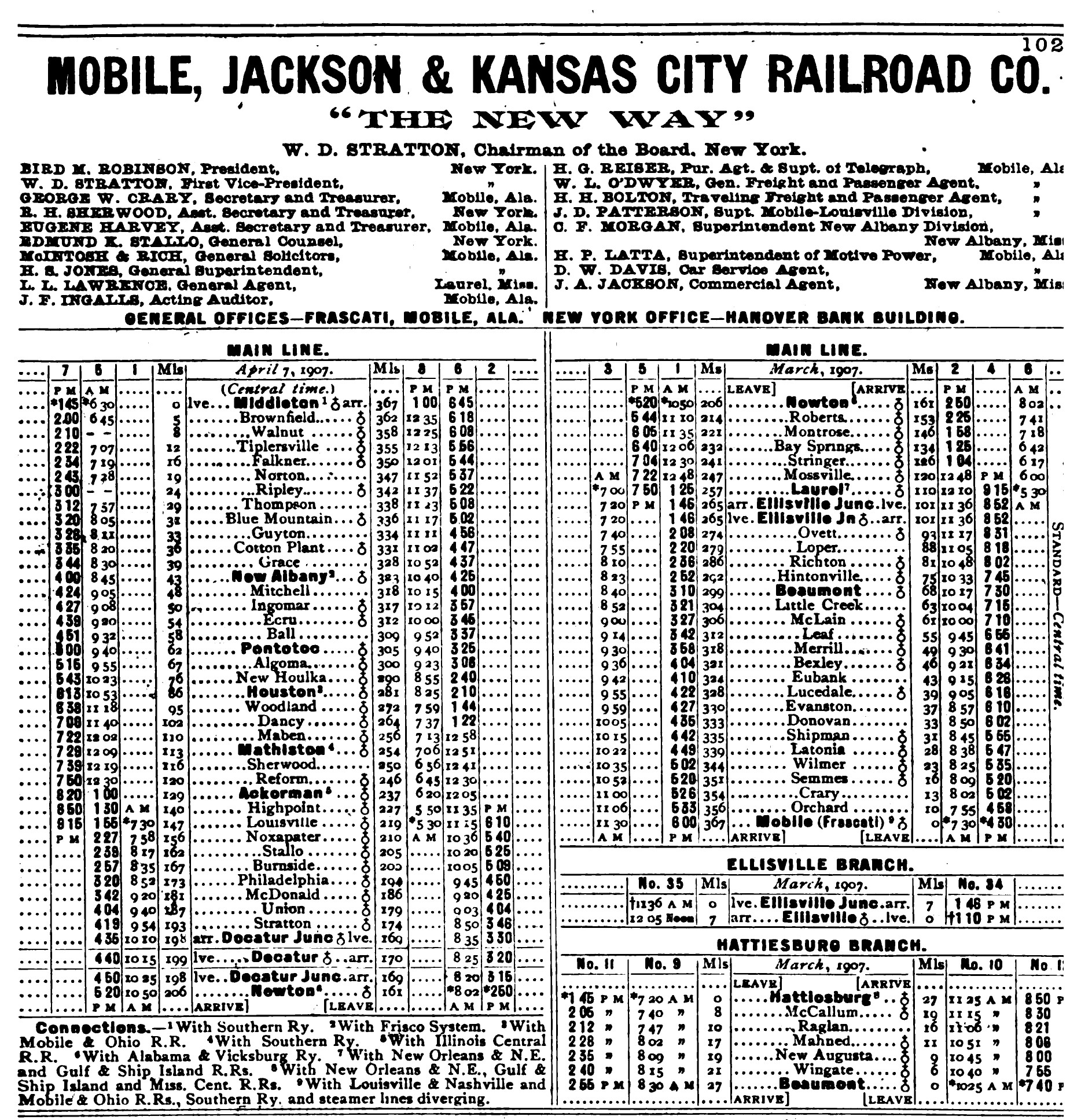
- The Mobile, Jackson, & Kansas City Railroad: Those travelers didn’t only want to move between those particular cities, of course, and another major line that developed over the next decades was the Mobile, Jackson, & Kansas City line, connecting Alabama’s Gulf Coast to both Tennesse I the North and Kansas City in the West. Laurel seems to have been part of that line since at least 1902 (if not before), and by 1907 its trains were making four stops a day in town, carrying not only passengers but a great deal of the lumber produced in the town’s and region’s mills. If being part of the NO&NE initially put Laurel on the map, becoming a major stop for multiple railways cutting across the Southeast and leading far beyond meant Laurel was undeniably part of an evolving and modernizing region and nation.
- Amtrak!: The history of how Laurel ended up as a stop on Amtrak’s Crescent line is very multi-part, including the 19th century line known as the Richmond & Danville, the Southern Railroad taking over the line in the 1920s and renaming its engine the Crescent in 1938, and then Amtrak taking over that Crescent line in 1978. The station in Laurel still used to this day by that Amtrak line is also quite historic, having been completed in 1913 and having been listed on the National Register of Historic Places since 1995. I love that Amtrak connects to all those prior lines and moments in the history of rail, region, and nation, and (train and public transportation advocates that we are) we also just really love seeing Amtrak trains go by in so many episodes of Home Town.
Next LaurelStudying tomorrow,
Ben
PS. What do you think?
Leave a Reply